
EDITORIAL ARTICLE
Prayer in Islam: Worship, Remembrance and Daily Life
A fuller explanation of the meaning, structure and daily experience of Salah beyond the concise answer about five prayer times.
Before You Begin
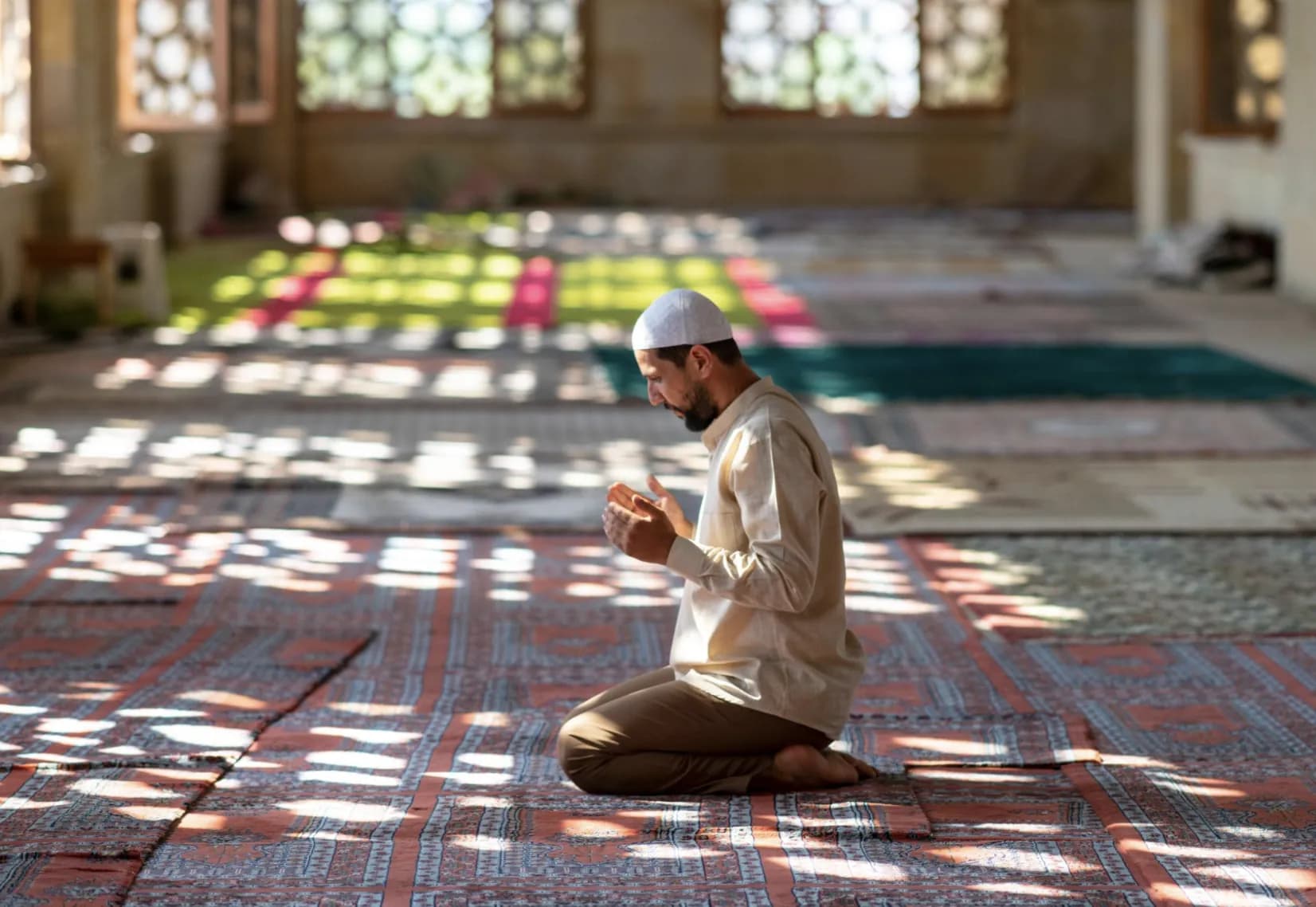
Salah is the formal prayer performed by Muslims throughout the day. It combines recitation, physical movement, remembrance and direct worship of God, creating a regular rhythm that connects faith with everyday life.
What Is Salah?
Salah is the Arabic term commonly used for the formal Muslim prayer. It follows an ordered sequence that includes standing, Qur’an recitation, bowing, prostration and sitting, all directed to God.
Why Prayer Matters
Prayer places worship within the ordinary movement of each day. Qur’an 4:103 describes prayer as an obligation connected with appointed times, while Qur’an 20:14 connects it directly with remembrance of God.
Prayer as Worship
Salah expresses devotion through intention, speech and bodily action. The movements are not exercise or performance. They form a repeated act of worship in which the believer stands, bows and prostrates before God.
Prayer as Remembrance
Daily routines can absorb attention. Salah interrupts that routine and returns attention to God. Its repetition can cultivate gratitude, awareness and moral discipline across different parts of the day.
The Five Daily Prayers
The Qur’an commands prayer and refers to prayer at different times, including Qur’an 11:114 and 17:78. It does not place the complete five prayer schedule in one verse. The established five prayers are also known through Prophetic tradition and continuous Muslim practice. Sahih al Bukhari 2678 identifies five obligatory prayers in a day and night.
Fajr
Fajr is the dawn prayer and is performed before sunrise. It begins the day with worship and remembrance.
Dhuhr
Dhuhr is the midday prayer. Its time begins after the sun has passed its highest point, bringing prayer into the working day.
Asr
Asr is the afternoon prayer. Recognized legal methods differ in the detailed calculation of its starting time, so local timetables may differ by several minutes.
Maghrib
Maghrib begins after sunset and marks the transition from day into evening.
Isha
Isha is the night prayer and completes the daily sequence after twilight has faded.
Preparing for Prayer
Preparation commonly includes ritual washing known as wudu, suitable clothing and a clean place. Detailed rulings vary according to circumstance, and an introductory article does not replace qualified guidance for individual questions.
Facing the Qiblah
Muslims face the direction of the Kaaba in Makkah during Salah. This shared direction gives the global practice a visible unity without implying that Muslims worship the building itself.
Prayer in Community
Salah may be performed individually or in congregation. Congregational prayer brings people together in a shared act of worship, while many daily prayers are also performed at home, work or another clean place.
Friday Prayer
The Friday congregational prayer is known as Jumu’ah. It includes a sermon and communal prayer and has a distinct place in the weekly rhythm of Muslim worship.
Prayer and Daily Life
The prayer times create recurring pauses for worship throughout changing responsibilities and environments. The practice connects spiritual intention with the actual structure of a person’s day.
SOURCE TRANSPARENCY
Sources and References
Source material and editorial explanation are identified separately so readers can understand where information comes from.
Qur’an References
- Primary Qur’an reference
Qur’an 4:103
Qur’an 4:103, Arabic text and reference location. No English translation is reproduced on this page.
View source - Primary Qur’an reference
Qur’an 20:14
Qur’an 20:14, Arabic text and reference location. No English translation is reproduced on this page.
View source - Primary Qur’an reference
Qur’an 11:114
Qur’an 11:114, Arabic text and reference location. No English translation is reproduced on this page.
View source - Primary Qur’an reference
Qur’an 17:78
Qur’an 17:78, Arabic text and reference location. No English translation is reproduced on this page.
View source
Hadith Sources
- Hadith source
Sahih al Bukhari 2678
Book of Witnesses, reference identifying five obligatory prayers in a day and night.
View source
NEXT LEARNING STEP